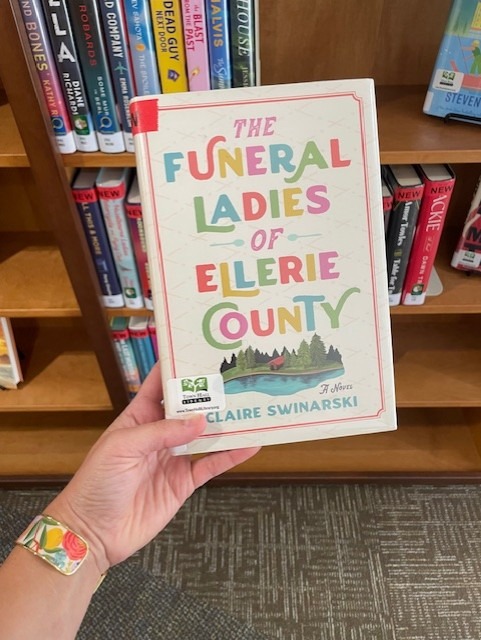
“The Funeral Ladies of Ellerie County” Claire Swinarski

About This Book:

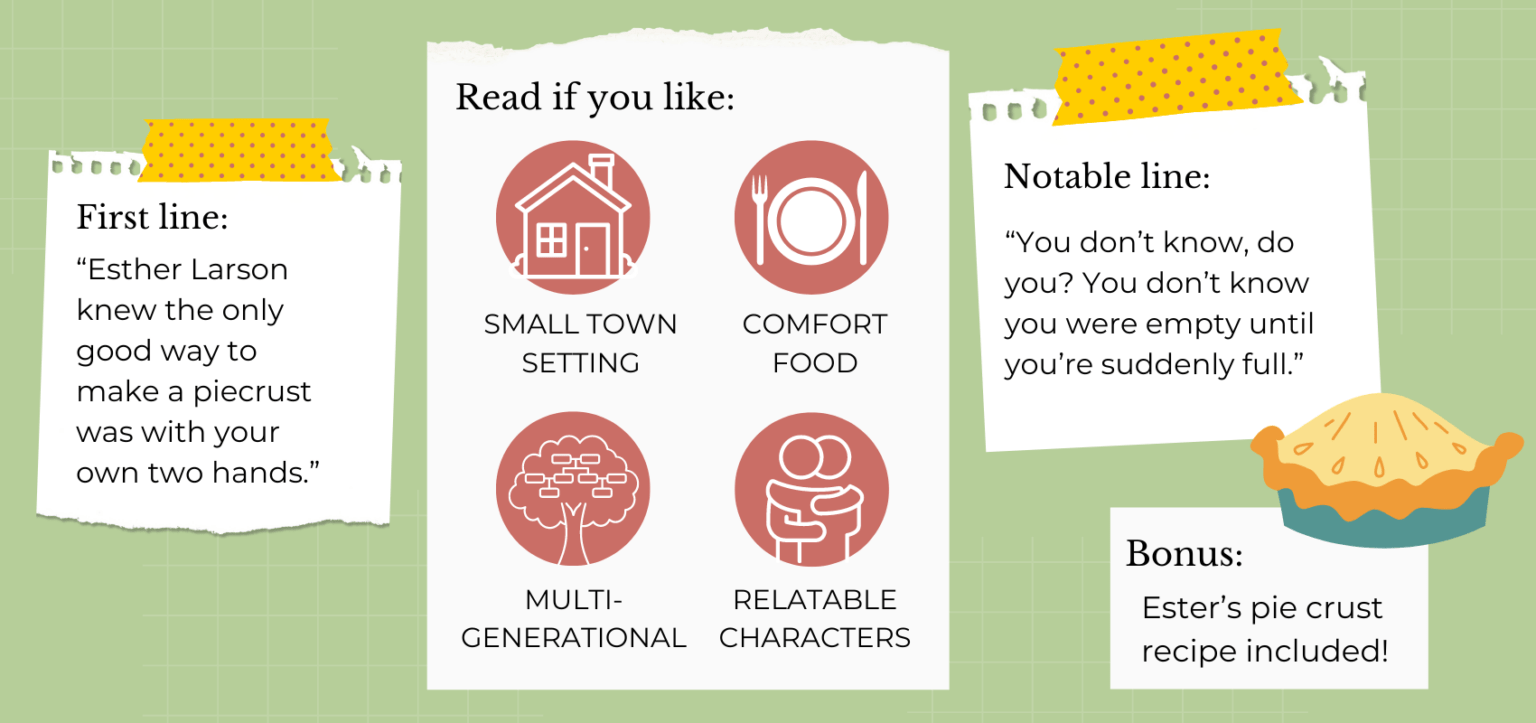
Armed with a Crock-Pot and a pile of recipes, a grandmother, her granddaughter, and a mysterious young man work to bring a community together in this uplifting novel for readers of The Chicken Sisters.

Esther Larson has been cooking for funerals in the Northwoods of Wisconsin for seventy years. Known locally as the “funeral ladies,” she and her cohort have worked hard to keep the mourners of Ellerie County fed—it is her firm belief that there is very little a warm casserole and a piece of cherry pie can’t fix. But, after falling for an internet scam that puts her home at risk, the proud Larson family matriarch is the one in need of help these days.

Iris, Esther’s whip-smart Gen Z granddaughter, would do anything for her family and her community. As she watches her friends and family move out of their lakeside town onto bigger and better things, Iris wonders why she feels so left behind in the place she is desperate to make her home. But when Cooper Welsh shows up, she finally starts to feel like she’s found the missing piece of her puzzle.

Cooper is dealing with becoming a legal guardian to his younger half-sister after his beloved stepmother dies. While their celebrity-chef father is focused on his booming career and top-ranked television show, Cooper is still hurting from a public tragedy he witnessed last year as a paramedic and finding it hard to cope. With Iris in the gorgeous Ellerie County, though, he hopes he might finally find the home he’s been looking for.

It doesn’t seem like a community cookbook could possibly solve their problems, especially one where casseroles have their own section and cream of chicken soup mix is the most frequently used ingredient. But when you mix the can-do spirit of Midwestern grandmothers with the stubborn hope of a boy raised by food plus a dash of long-awaited forgiveness—things might just turn out okay.

From HaperCollins Publishers’ website

My Thoughts After Reading:

In many ways, The Funeral Ladies of Ellerie County is a love letter to life in Wisconsin. The author does a wonderful job capturing our beloved badger state’s culture: raving about Culvers and Kwik Trip, never skipping happy hour, finding solace in the woods, welcoming loons back to the lake, and more. Much of this book’s charm comes from understanding lake life quirks and Midwest hospitality. This would certainly be lost on non-Midwest readers.  But, lucky for you (a presumed patron of the Town Hall Library and thus, Wisconsin resident), I think you’ll really enjoy this aspect of the book. 

Similarly, I believe you’ll relate to many of the characters; they are real people with real problems. I know a real-life version of every character portrayed in this book, with the exception of a celebrity chef – can’t say I know anyone with that kind of culinary clout.  The chapters featuring the entire cast of funeral ladies ended up being my favorite pages to read.  Given the title, I felt they deserved more dedicated page time. 

This is a heartwarming and often humorous read that does tackle heavy issues including PTSD, grief, family dysfunction and domestic abuse. I admired the sensitive way Swinarski handled the serious topics including the romance between Iris and the troubled Cooper. Their storyline was unconventional, yet more realistic, when compared to your typical small-town romance tropes.

In under 300 pages, Swinarski delivers a surprisingly complex story bursting with love, community, hope… and pie.

– Michelle
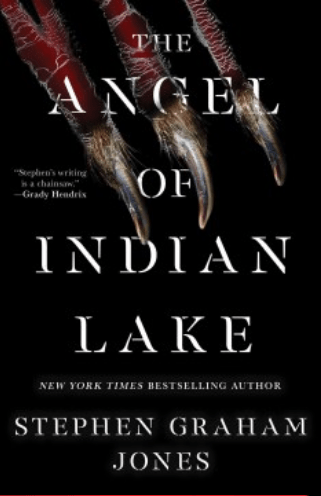
“The Angel of Indian Lake” Stephen Graham Jones

Summary:

“It’s been four years in prison since Jade Daniels last saw her hometown of Proofrock, Idaho, the day she took the fall, protecting her friend Letha and her family from incrimination. Since then, her reputation, and the town, have changed dramatically. There’s a lot of unfinished business in Proofrock, from serial killer cultists to the rich trying to buy Western authenticity. But there’s one aspect of Proofrock no one wants to confront…until Jade comes back to town. The curse of the Lake Witch is waiting, and now is the time for the final stand.

New York Times bestselling author Stephen Graham Jones has crafted an epic horror trilogy of generational trauma from the Indigenous to the townies rooted in the mountains of Idaho. It is a story of the American west written in blood.”

From: https://www.simonandschuster.com/books/The-Angel-of-Indian-Lake/Stephen-Graham-Jones/The-Indian-Lake-Trilogy/9781668011669

Overview:

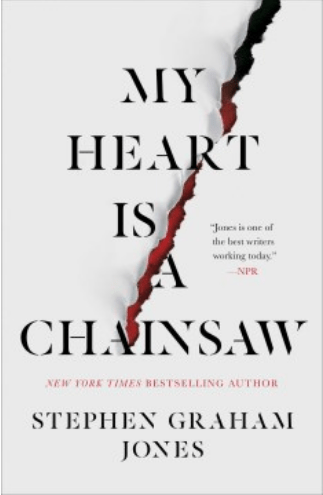
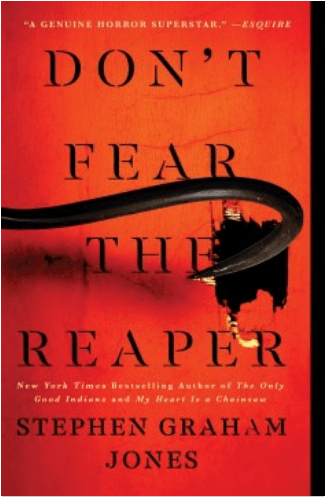
How many times can killers beset a small town? How many times can the same heroine rise to the occasion and thwart the relentless evil that attacks with brutality in seemingly inexhaustive supply? If one were to take Stephen Graham Jones’s Indian Lake Trilogy at face value, they might say, “three.” But once they’ve read the whole tale—the one that begins with My Heart is a Chainsaw, hurtles through Don’t Fear the Reaper, and concludes with The Angel of Indian Lake—they will know the number is much, much higher. Jones and his reluctant protagonist, Jennifer “Jade” Daniels, return to Proofrock four years after the events of Reaper and eight years since everything began with Chainsaw. And right on schedule, things go increasingly wrong. In true trilogy fashion, Jones takes the reader off the rails following and subverting the rules of the genre, particularly those listed by Randy in the second and third installments of the Scream franchise. Higher body count? Check. More elaborate deaths? Check. Superhuman killer? Anyone can die? The past will come back? Well . . . you’ll just have to pick up the book to find out.
Thoughts:

It is possible to consider The Angel of Indian Lake outside of the trilogy Jones has penned, but it wouldn’t be complete. These books can stand alone (I think), but that doesn’t mean that they should. Jade’s story doesn’t end with any one of these books. It doesn’t begin with any of them either. It may seem unbelievable, at the very least fantastical, that so much would happen to one town and one girl/woman in particular. But Kurt Vonnegut once said of protagonists, “. . . make awful things happen to them—in order that the reader may see what they are made of.” It may not take all three installments of the trilogy for us to see what Jennifer “Jade” Daniels is made of, but it does take the events of all three books for Jade to see what she is made of. And that is at the heart of any good story—growth and self-realization. It may have taken an unimaginable series of tragedies and more than a few buckets of gore to get her here, but in the end, Jade knows who she is and what she is and she is no longer searching for the next final girl.

Look for the first two installments of the Indian Lake Trilogy at Town Hall Library!

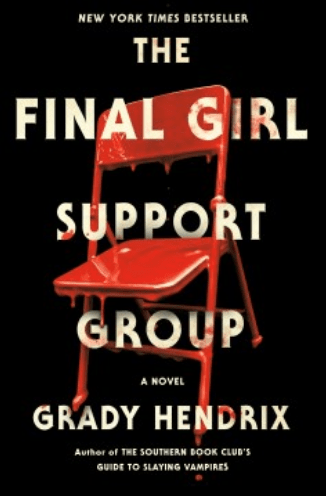
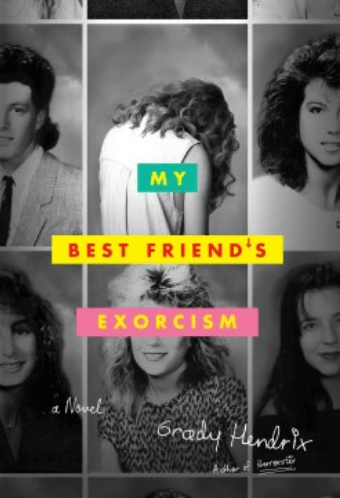
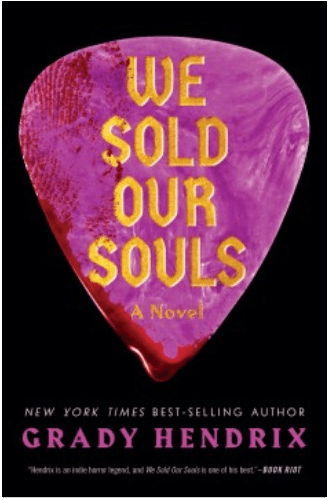
“The Southern Book Club’s Guide to Slaying Vampires” Grady Hendrix

Summary:

“Patricia Campbell’s life has never felt smaller. Her husband is a workaholic, her teenage kids have their own lives, her senile mother-in-law needs constant care, and she’s always a step behind on her endless to-do list. The only thing keeping her sane is her book club, a close-knit group of Charleston women united by their love of true crime. At these meetings they’re as likely to talk about the Manson family as they are about their own families.

One evening after book club, Patricia is viciously attacked by an elderly neighbor, bringing the neighbor’s handsome nephew, James Harris, into her life. James is well traveled and well read, and he makes Patricia feel things she hasn’t felt in years. But when children on the other side of town go missing, their deaths written off by local police, Patricia has reason to believe James Harris is more of a Bundy than a Brad Pitt. The real problem? James is a monster of a different kind—and Patricia has already invited him in.

Little by little, James will insinuate himself into Patricia’s life and try to take everything she took for granted—including the book club—but she won’t surrender without a fight in this blood-soaked tale of neighborly kindness gone wrong.”

From: https://www.penguinrandomhouse.com/books/608677/the-southern-book-clubs-guide-to-slaying-vampires-by-grady-hendrix/

Overview:

The Southern Book Clubs Guide to Slaying Vampires by Grady Hendrix is simultaneously everything and nothing that its title suggests. Upon reading the moniker, one might get the impression that this is a comedic satire. It is. And it isn’t. There are funny moments and there are satirical moments. Sometimes the two even intersect. But Hendrix does so much more. The satire can be funny, but it can also be scathing. The humor can be both amusing and frustrating, and it is counterbalanced by the very fact that this is still a horror novel. It may not be just a horror novel, but it is horrific when it needs to be. Hendrix does a fantastic job of blending all of these elements in a way that can critique the culture and time period addressed without feeling that he is writing with an agenda. He can make you laugh out loud without cheapening the visceral moments. None of these seemingly contrasting constituent parts are at odds. They don’t conflict. Nothing feels out of place as Hendrix transitions effortlessly between modes.

Thoughts:

Hendrix accomplishes quite a significant feat in a book that is socially conscious, often humorous, and frequently terrifying—he invokes a range of emotion in the reader. He takes characters that could easily be dismissed as stereotypes and caricatures and turns them into fully-formed individuals. Readers will find themselves increasingly frustrated by Patricia’s woes and will want to fight for her and those she holds dear, not only against the evil in which she alone believes but against the social and familial mistreatment she must endure as the only seemingly sane person in a collection of characters that have written her off as mad.

More works by Grady Hendrix, available at Town Hall Library!

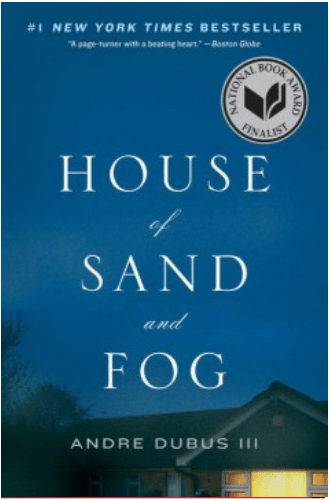
“House of Sand and Fog” Andre Dubus III

 Summary:

The National Book Award finalist, Oprah’s Book Club pick, #1 New York Times bestseller and basis for the Oscar-nominated motion picture.

A recent immigrant from the Middle East—a former colonel in the Iranian Air Force—yearns to restore his family’s dignity in California. A recovering alcoholic and addict down on her luck struggles to hold onto the one thing she has left, her home. And her lover, a married cop, is driven to extremes to win her love.

Andre Dubus III’s unforgettable characters—people with ordinary flaws, looking for a small piece of ground to stand on—careen toward inevitable conflict. Their tragedy paints a shockingly true picture of the country we live in today.”

From: https://wwnorton.com/books/9780393356342


Overview: 

Andre Dubus III’s novel brings together two narratives of the American Dream and the potential for such dreams to quickly turn to nightmares. The story alternates between two characters—a U.S. born woman forced from her home due to a clerical mistake showing that she has an unpaid tax bill and an Iranian immigrant who has purchased a home for his family only to find that the home was sold to him in error—neither of whom are responsible for the situation in which they find themselves. Dubus presents first person perspectives for each of these characters with seemingly genuine insight into their respective plights and the wronged feelings each cannot help but experience. Dubus education in sociology is put to work in this tale of failed bureaucratic processes and the human fallout that can result from such failures.

Thoughts:

House of Sand and Fog presents a realistic portrayal of human beings cast into an, unfortunately, all too believable scenario in which no one would ever conceivably believe they might find themselves. It is impossible not to see the opposing sides of this story and feel that neither character is wrong but rather the flawed system that puts them at odds. Though, while not wrong in their positions, no character is innocent in their actions. Dubus draws portraits that are simultaneously sympathetic and deeply flawed, as he builds a toward a life-altering finale, the impact of which extends far beyond the principle players.

Enjoyed this book? Check out the film, starring Jennifer Connelly and Ben Kingsley, available at Town Hall Library!

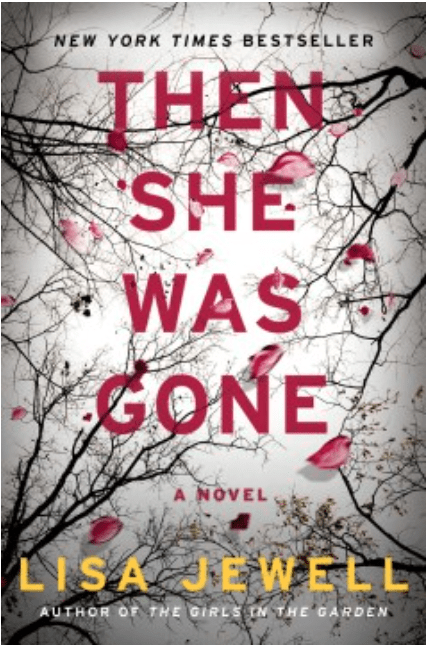
“Then She Was Gone” Lisa Jewell

 Summary:

Ellie Mack was the perfect daughter. She was fifteen, the youngest of three. Beloved by her parents, friends, and teachers, and half of a teenaged golden couple. Ellie was days away from an idyllic post-exams summer vacation, with her whole life ahead of her.

And then she was gone.

Now, her mother Laurel Mack is trying to put her life back together. It’s been ten years since her daughter disappeared, seven years since her marriage ended, and only months since the last clue in Ellie’s case was unearthed. So when she meets an unexpectedly charming man in a café, no one is more surprised than Laurel at how quickly their flirtation develops into something deeper. Before she knows it, she’s meeting Floyd’s daughters—and his youngest, Poppy, takes Laurel’s breath away.

Because looking at Poppy is like looking at Ellie. And now, the unanswered questions she’s tried so hard to put to rest begin to haunt Laurel anew. Where did Ellie go? Did she really run away from home, as the police have long suspected, or was there a more sinister reason for her disappearance? Who is Floyd, really? And why does his daughter remind Laurel so viscerally of her own missing girl?”

From: https://www.simonandschuster.com/books/Then-She-Was-Gone/Lisa-Jewell/9781501154652

Overview:

It would be inaccurate to say that Lisa Jewell’s Then She Was Gone starts in the middle. The truth is, the story starts surprisingly close to its conclusion. Ellie Mack has disappeared but not recently. She’s been gone for ten years already by the time the reader joins the fray. Following her mother, Laurel, the reader gets a picture of life both before and after Ellie’s disappearance. The timeline shifts from past to present and back again throughout the story, offering pieces that begin to connect in the reader’s mind. The narrative purpose of these pieces demands no heavy lifting on the part of the reader, though. The structure is more akin to a simple 100 piece jigsaw puzzle, where the placement of each object quickly becomes clear, than it is to a 1,000 piece monstrosity full of vibrant and overlapping colors that require dedicated determination on the part of the solver. Jewell’s book is not intended to be such an arduous effort. It is a story designed to allow a picture of events to unfold before the reader without relying on clever twists or unexpected surprises. It is simple and complete and devoid of the unforeseen.

Thoughts:

As noted above, Lisa Jewell’s Then She Was Gone is not designed to surprise you. It is not a book where you read the last page of some late chapter and say out loud, “Well, I didn’t see that coming.” It’s not that type of mystery. The details are presented in their own time and—as previously noted—create a clear path to the finish. I, personally, like a fair dose of the unpredictable in the mysteries I read, but to each their own. Where I really see a hiccup in Jewell’s methods begins about nearly halfway into the book. With the start of Part Three, there is a surprising shift in narrative perspective, one that is echoed even more jarringly toward the end of the book. The sudden shift in narration after over a hundred and fifty pages of prose feels a bit awkward. It almost reads as though Jewell started the book with an idea and lost her handle on how to bring it all together, so she chose to incorporate these not-so-subtle shifts in the presentation of the story to provide a purely expositional explanation of events. The book is not dissatisfying for those insistent on concise explanations and the variety of closure that does not abide loose ends. It is capably written and the premise is intriguing. I only wish the story had unfolded with a little more show and a little less tell.

More Lisa Jewell, available at Town Hall Library.

“The Road” Cormac McCarthy

 Summary:

“WINNER OF THE PULITZER PRIZE • NATIONAL BESTSELLER • A searing, post-apocalyptic novel about a father and son’s fight to survive, this ”tale of survival and the miracle of goodness only adds to McCarthy’s stature as a living master. It’s gripping, frightening and, ultimately, beautiful” (San Francisco Chronicle). • From the bestselling author of The Passenger

A father and his son walk alone through burned America. Nothing moves in the ravaged landscape save the ash on the wind. It is cold enough to crack stones, and when the snow falls it is gray. The sky is dark. Their destination is the coast, although they don’t know what, if anything, awaits them there. They have nothing; just a pistol to defend themselves against the lawless bands that stalk the road, the clothes they are wearing, a cart of scavenged food—and each other.

The Road is the profoundly moving story of a journey. It boldly imagines a future in which no hope remains, but in which the father and his son, “each the other’s world entire,” are sustained by love. Awesome in the totality of its vision, it is an unflinching meditation on the worst and the best that we are capable of: ultimate destructiveness, desperate tenacity, and the tenderness that keeps two people alive in the face of total devastation.”

From: https://www.penguinrandomhouse.com/books/110490/the-road-by-cormac-mccarthy/

Overview:

Like other works by Cormac McCarthy, The Road is described in rich detail, though in a largely journalistic fashion—without any real hint of emotional investment on the part of the narrator. McCarthy almost seems to go out of his way to ensure that the narrator does not become a character in the story, remaining nothing more than a reporter limited in scope to their omniscience. It is the stark and detached narrative voice that highlights the desolation of McCarthy’s post-apocalyptic landscape in The Road.  

Thoughts:

I have always felt that I want to like McCarthy’s work more than I actually do. This isn’t to say that I did not enjoy this book or have not enjoyed other books he has penned. It is only to say that the narrative voice, discussed in the Overview section above, sometimes leaves the reader feeling equally detached. Empathy for the characters can become as hard for the reader to attain as it is for those left to wander blindly in the barren world of McCarthy’s creation. In the case of The Road, though, McCarthy hasn’t built his world in such a bleak manner without purpose. If the reader is willing to put in the work, to take on the same burden of despair as the characters in the story, there is a payoff—and a surprisingly emotional one at that. This Pulitzer Prize winning novel is not a difficult read because of its language. It doesn’t present hard-edged or abstract questions. But it is a demanding read, for what it does is ask the reader to experience the emptiness of a world gone over and to find humanity where it is all but forgotten.

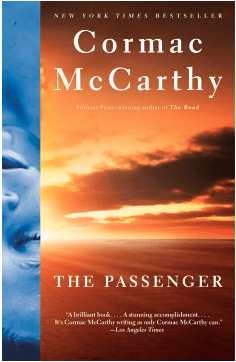
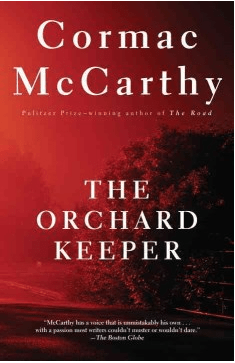
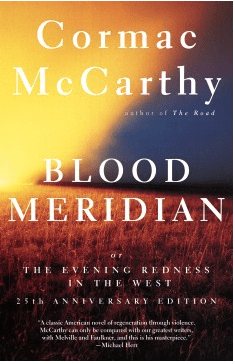
Looking for more from Cormac McCarthy? Check out these books available at Town Hall Library.

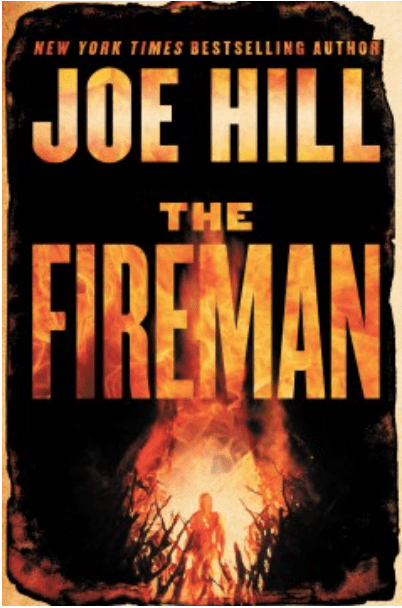
“The Fireman” Joe Hill

 Summary:

“No one knows exactly when it began or where it originated. A terrifying new plague is spreading like wildfire across the country, striking cities one by one: Boston, Detroit, Seattle. The doctors call it Draco Incendia Trychophyton. To everyone else it’s Dragonscale, a highly contagious, deadly spore that marks its hosts with beautiful black and gold marks across their bodies—before causing them to burst into flames. Millions are infected; blazes erupt everywhere. There is no antidote. No one is safe.

Harper Grayson, a compassionate, dedicated nurse as pragmatic as Mary Poppins, treated hundreds of infected patients before her hospital burned to the ground. Now she’s discovered the telltale gold-flecked marks on her skin. When the outbreak first began, she and her husband, Jakob, had made a pact: they would take matters into their own hands if they became infected. To Jakob’s dismay, Harper wants to live—at least until the fetus she is carrying comes to term. At the hospital, she witnessed infected mothers give birth to healthy babies and believes hers will be fine too. . . if she can live long enough to deliver the child.

Convinced that his do-gooding wife has made him sick, Jakob becomes unhinged, and eventually abandons her as their placid New England community collapses in terror. The chaos gives rise to ruthless Cremation 

Squads—armed, self-appointed posses roaming the streets and woods to exterminate those who they believe carry the spore. But Harper isn’t as alone as she fears: a mysterious and compelling stranger she briefly met at the hospital, a man in a dirty yellow fire fighter’s jacket, carrying a hooked iron bar, straddles the abyss between insanity and death. Known as The Fireman, he strolls the ruins of New Hampshire, a madman afflicted with Dragonscale who has learned to control the fire within himself, using it as a shield to protect the hunted . . . and as a weapon to avenge the wronged.

In the desperate season to come, as the world burns out of control, Harper must learn the Fireman’s secrets before her life—and that of her unborn child—goes up in smoke.”

From: https://www.harpercollins.com/products/the-fireman-joe-hill?variant=32206615543842

Overview:

Joe Hill makes the fantastic seem all too plausible with his longest novel to date. His attention to detail gives the story a developed, lifelike texture that aids in the monumental task of giving imagination life. But stories are not written in a vacuum. Not a single story has been put to paper without its fair share of influence, and Hill is no exception. He owns this, wears his influences like a badge of pride. He calls them out, by name, before the story gets underway. The page immediately following the dedication is reserved for naming the muses to whom he owes a debt of gratitude and citing their specific contributions not only to his complete body of work but to this book in particular. Notable among those recognized is his father—pop-fiction monolith, Stephen King. Hill confesses that his father is the author “ . . . from whom I stole the rest.” It is impossible for any who are familiar with King’s work to not notice his fingerprints on Hill’s story. The premise itself aligns with King’s longest single work, The Stand: creating a post-apocalyptic setting in the wake of a highly fatal contagion. One scene, and a particular line of dialogue, is lifted directly from this novel. Beyond The Stand, readers will see other parallels to King (the pyrokinetic abilities of some of the characters cannot be read without recalling King’s 1980 novel, Firestarter). There are other more subtle nods to his father’s work throughout the book. There are even some that the reader may start to see, parallels they may begin to draw, that turn out to be red-herrings created not by Hill but the associations of the readers’ own minds.

Thoughts:

On the whole, The Fireman is a well-crafted and enjoyable read. Its territory is familiar, but the novel’s well-trodden subject is not a hindrance. Instead it adds to the comfort, like slipping into a much loved and worn-to-tatters sweater. It also compounds the anticipation, as familiarity with this type of story and the behaviors of characters in such tales allows to the reader to see potential pitfalls that the characters, born to serve the authors intent, may not. There are a few places where a line of dialogue is jarring—usually because of a combination of the words themselves and the character uttering them—but there are bound to be such missteps when a book finds itself in the ballpark of 190,000 words. Given the overall competence of the writing and craftsmanship of the story, I think we can forgive such minor infractions.

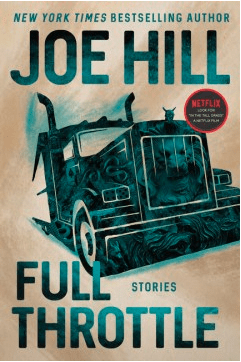
More works from Joe Hill, available at Town Hall Library!

“Leave the World Behind” Rumaan Alam

 Summary:

“A magnetic novel about two families, strangers to each other, who are forced together on a long weekend gone terribly wrong.

From the bestselling author of Rich and Pretty comes a suspenseful and provocative novel keenly attuned to the complexities of parenthood, race, and class. Leave the World Behind explores how our closest bonds are reshaped—and unexpected new ones are forged—in moments of crisis.

Amanda and Clay head out to a remote corner of Long Island expecting a vacation: a quiet reprieve from life in New York City, quality time with their teenage son and daughter, and a taste of the good life in the luxurious home they’ve rented for the week. But a late-night knock on the door breaks the spell. Ruth and G. H. are an older couple—it’s their house, and they’ve arrived in a panic. They bring the news that a sudden blackout has swept the city. But in this rural area—with the TV and internet now down, and no cell phone service—it’s hard to know what to believe.

Should Amanda and Clay trust this couple—and vice versa? What happened back in New York? Is the vacation home, isolated from civilization, a truly safe place for their families? And are they safe from one other?”

From: https://www.harpercollins.com/products/leave-the-world-behind-rumaan-alam?variant=39254096838690

Overview:

Something has happened—something significant, something world changing. Yet this something, this catalyst for Rumaan Alam’s Leave the World Behind, takes a backseat, is simply a plot device in a novel that really isn’t plot driven. This novel is not about the events that create the situation, or even the situation itself; this novel is about people. Plain and simple. It’s not about how people react to adversity and uncertainty, thought those are unavoidable components of the story. The novel is about how people work: their prejudices and preconceptions—not only with regard to others, or how the world should be, but also how they see themselves. At its core the novel is about people struggling with their inclinations—good and bad—while moving through a world that has changed, is changing, and processing their notions of self and the other. It is a story of the endless reckoning that takes place throughout lives, but it is not a journey. It is a snapshot of life in its ongoing complexity.

Thoughts:

Alam’s Leave the World Behind starts out innocuously enough. It feels, if anything, banal. A family leaves for a vacation: a chance to, as the title says, leave the world behind. The prose feels almost excessively heavy in its description at the onset. But, as the novel progresses, this depth of detail becomes the very locus of the character studies at the heart of the book. Alam’s insight into people’s inner-workings, without judgement or value assessment, provides a lens through which we cannot help but gauge ourselves.

Leave the World Behind has recently been adapted as a Netflix film starring Mahershala Ali, Julia Roberts, and Ethan Hawke. The film deviates somewhat from Alam’s story, leaning more heavily on the question of what exactly has happened, using devices better suited to film in an effort to create tensions that vary in ways from those in the book. Despite these changes, both the book and the film are worth the reader’s/viewer’s time, as the latter differs enough to stand apart from the former without being so far removed from the source material as to seem negligent.

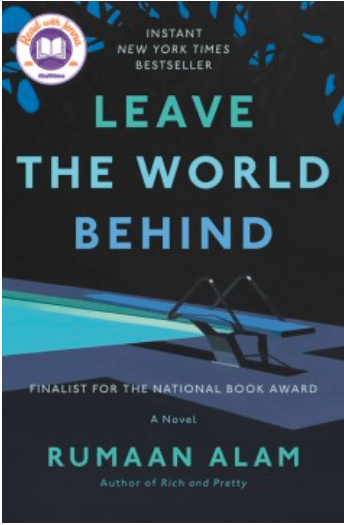
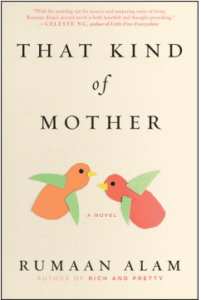
Also by Rumaan Alam

Available at Town Hall Library

“Demon Copperhead” Barbara Kingsolver

 Summary:

“Set in the mountains of southern Appalachia, Demon Copperhead is the story of a boy born to a teenaged single mother in a single-wide trailer, with no assets beyond his dead father’s good looks and copper-colored hair, a caustic wit, and a fierce talent for survival. Relayed in his own unsparing voice, Demon braves the modern perils of foster care, child labor, derelict schools, athletic success, addiction, disastrous loves, and crushing losses. Through all of it, he reckons with his own invisibility in a popular culture where even the superheroes have abandoned rural people in favor of cities.

Many generations ago, Charles Dickens wrote David Copperfield from his experience as a survivor of institutional poverty and its damages to children in his society. Those problems have yet to be solved in ours. Dickens is not a prerequisite for readers of this novel, but he provided its inspiration. In transposing a Victorian epic novel to the contemporary American South, Barbara Kingsolver enlists Dickens’ anger and compassion, and above all, his faith in the transformative powers of a good story. Demon Copperhead speaks for a new generation of lost boys, and all those born into beautiful, cursed places they can’t imagine leaving behind.”

From: https://www.harpercollins.com/products/demon-copperhead-barbara-kingsolver?variant=40073146204194

Overview:

Kingsolver draws the reader into a part of America with which they may not be familiar, one they may have already—consciously or unconsciously—filed away under some broad, possibly unfair and unkind, stereotype. She makes this setting a character, well rounded and three dimensional, without the snide dismissal so often cast on the quieter corners of the country. She draws the reader into the heart of Appalachia: a real place, populated with real people and their all too real strife. Kingsolver does this without mercy, opting not to wade readers gently through the shallows but to drop them straight into the rip current, where they are left to struggle helplessly against its pull. Floundering amidst the crashing waves of poverty, neglect, and addiction, the reader follows Demon through each phase of his life, be it yet another setback or a momentary triumph, until the stakes feel as important to the reader as they are to the protagonist himself. Demon Copperhead  may be a work of fiction, but Kingsolver’s use of historical information—from the documented oppression and exploitation of coal workers to the  opioid crisis and its impact on rural areas like Demon’s beloved Lee County—paints a picture as honest and true as any plucked from real life.

Thoughts:

Having not previously read the Dickens story to which Kingsolver’s Pulitzer Prize winning novel aspires, I cannot speak in direct comparisons. I can, however, say that Demon Copperhead is deserving of the praise it has received and each and every one of the sixty-four weeks it has spent on the New York Times’s Bestseller List. It is an utterly human look at a life moving through utterly dehumanizing obstacles and emerging on the other side a product of these experiences—for better or worse.

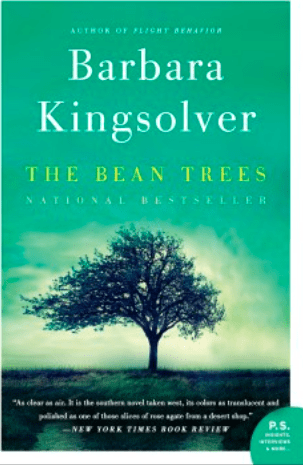
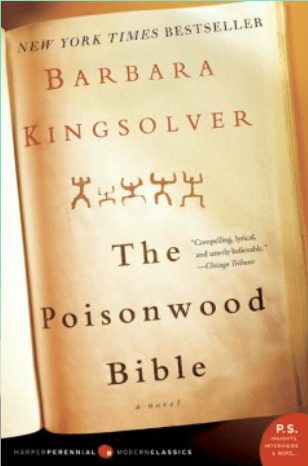
Check out these other reads from Barbara Kingsolver, including the Pulitzer Prize nominated The Poisonwood Bible, available at Town Hall Library.

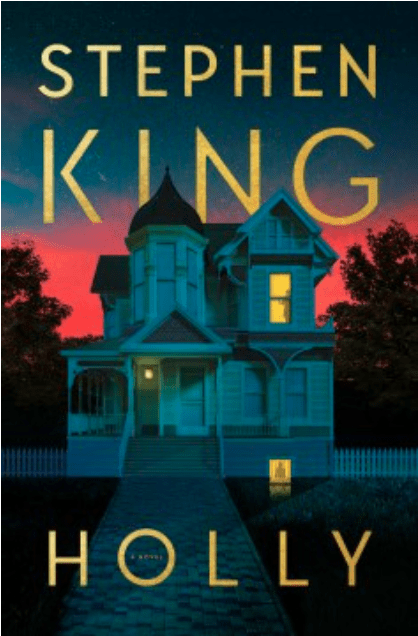
“Holly” Stephen King

 Summary:

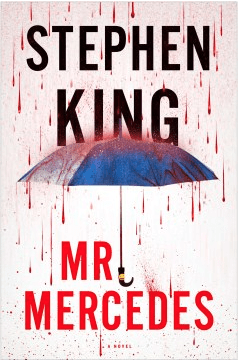
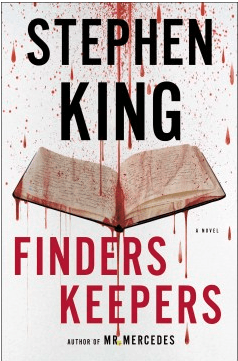
“Stephen King’s Holly marks the triumphant return of beloved King character Holly Gibney. Readers have witnessed Holly’s gradual transformation from a shy (but also brave and ethical) recluse in Mr. Mercedes to Bill Hodges’s partner in Finders Keepers to a full-fledged, smart, and occasionally tough private detective in The Outsider. In King’s new novel, Holly is on her own, and up against a pair of unimaginably depraved and brilliantly disguised adversaries.

When Penny Dahl calls the Finders Keepers detective agency hoping for help locating her missing daughter, Holly is reluctant to accept the case. Her partner, Pete, has Covid. Her (very complicated) mother has just died. And Holly is meant to be on leave. But something in Penny Dahl’s desperate voice makes it impossible for Holly to turn her down.

Mere blocks from where Bonnie Dahl disappeared live Professors Rodney and Emily Harris. They are the picture of bourgeois respectability: married octogenarians, devoted to each other, and semi-retired lifelong academics. But they are harboring an unholy secret in the basement of their well-kept, book-lined home, one that may be related to Bonnie’s disappearance. And it will prove nearly impossible to discover what they are up to: they are savvy, they are patient, and they are ruthless.

Holly must summon all her formidable talents to outthink and outmaneuver the shockingly twisted professors in this chilling new masterwork from Stephen King.”

From: https://www.simonandschuster.com/books/Holly/Stephen-King/9781668016138

Overview:

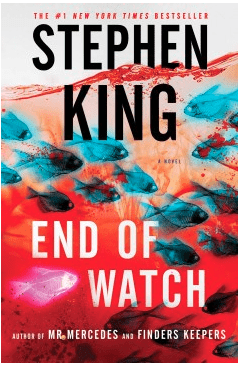
Stephen King’s approach to Holly is not unique. It is familiar. It does not waiver from that which he’s used in works such as the Bill Hodges trilogy (Mr. Mercedes, Finders Keepers, and End of Watch). In other words, his approach is the same as it has always been for works in which we find the character of Holly Gibney. As is the case with the Bill Hodges trilogy, there is a mystery to be solved for the characters in the book, but not for the reader. The reader is privy to everything, for the omniscient narrator holds nothing back. Able to see the story from the perspectives of both the protagonists and antagonists builds a different kind of tension. Rather than staying close to Holly, following along and waiting to find out the details as she does, the reader already knows the who, what, where, when, why, and how. The suspense, instead, builds from the question: Will Holly find out in time?

Thoughts:

King’s real talent has always existed in his ability to establish characters that are realistic in their complexity even in the most fantastical of situations, and with Holly, he is once again successful in this regard. For constant readers and established fans of Ms. Gibney, this book will not disappoint. The same awkward, quirky character first encountered in Mr. Mercedes lives within the pages, but she has grown and continues to grow with each new experience. Readers new to Holly Gibney, or King in general, will find endearing characters in both the titular protagonist and her supporting cast.

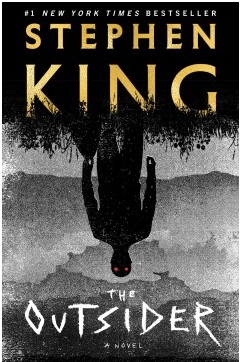
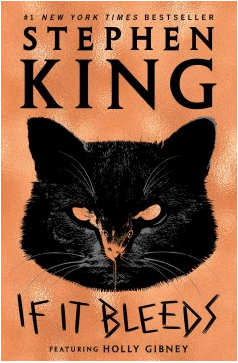
Looking for more Holly Gibney? Check out these additional titles available at Town Hall Library.